

Affiliate Disclosure
HVAC Guide Guys is a participant in the Amazon Services LLC Associates Program, an affiliate advertising program designed to provide a means for sites to earn advertising fees by advertising and linking to Amazon.
Ever felt your home feels off, even when it’s just the right temperature? It might be your HVAC system’s humidity management.

Keeping the right humidity is key for a comfy and healthy home. Your HVAC does more than heat and cool. It also manages moisture, affecting your health and home’s safety.
Learning to control RH in HVAC is more than a tech task. It’s about making your space safe, protecting your property, and keeping you comfy all year.
Key Takeaways
- Relative humidity significantly impacts indoor comfort and health
- HVAC systems are critical for effective moisture control
- Proper RH levels prevent mold and structural damage
- Humidity management goes beyond temperature regulation
- Professional HVAC maintenance ensures optimal humidity control
Table of Contents
Understanding Relative Humidity and Its Impact on Indoor Comfort
Keeping your indoor space comfortable is more than just about the temperature. Relative humidity is key to a healthy and cozy living area. Your HVAC system does more than just control the air’s temperature. It also manages moisture levels, which affect your comfort, health, and property.
What Is Relative Humidity in HVAC Systems
Relative humidity shows how much moisture is in the air compared to what it can hold at a certain temperature. It’s vital for managing humidity in your home’s air conditioning. When the air feels too wet or too dry, it’s because of the relative humidity.
- Measured as a percentage
- Directly influenced by temperature
- Impacts overall indoor comfort
Why RH Matters for Your Health and Home
Not having the right humidity levels can harm your health and home. Low humidity (less than 30%) can cause:
- Dry skin and irritated respiratory passages
- Static electricity
- Damage to wood furniture and flooring
High humidity (over 60%) leads to:
- Mold and dust mite growth
- Musty odors
- Potential structural damage
“Controlling humidity is not just about comfort—it’s about protecting your health and home investment.” – HVAC Comfort Experts
Ideal Relative Humidity Levels for Residential and Commercial Spaces
Commercial spaces need careful humidity control. ASHRAE standards say the best range for comfort and health is 40-60% relative humidity. This range helps avoid moisture problems while keeping the environment comfortable.
For most homes and offices, keeping humidity between 40-60% ensures:
- Improved air quality
- Reduced risk of mold and bacteria
- Enhanced personal comfort
- Protection of interior materials and equipment
Explore Our HVAC Shop
Looking for top-rated HVAC tools, parts, and accessories? Visit our shop and find the perfect solution for your needs.
Visit the ShopThe Connection Between Your HVAC System and Humidity Control
Your HVAC system does more than cool your home. It controls humidity, acting as a moisture management machine. Warm air going through your system does something amazing.
The core process of hvac moisture management involves several key steps:
- Warm air enters the HVAC system
- Air passes over cold evaporator coils
- Moisture condenses on these coils
- Water droplets collect in a drain pan
- Cooled, drier air returns to your living space
Think of your air conditioner like a powerful dehumidifier. As air temperature drops, it can hold less moisture. This lets your HVAC system remove extra water vapor, making your home more comfortable.
Proper humidity control means your system needs to run long enough to remove moisture. Quick cooling cycles might cool the air but won’t control humidity well. Your HVAC parts work together to keep your home comfortable.
Knowing this connection helps you see when your system might need help. Feeling cold but clammy means your HVAC might not be managing moisture right. This could mean you need maintenance or a bigger system.
How Air Conditioners and Heat Pumps Remove Moisture from Indoor Air
Your HVAC system does more than cool your home. It also manages humidity levels. Knowing how it removes moisture helps keep your home comfortable.
Removing humidity involves several parts working together. Your air conditioner makes warm, moist air cool and dry. It does this through refrigeration and condensation.
The Role of Evaporator Coils in Dehumidification
Evaporator coils are key in controlling humidity. They cool down to 40-50°F, perfect for pulling moisture out of the air. When warm air hits these cold coils, the water vapor turns into liquid droplets.
- Coil surface area impacts moisture removal efficiency
- Clean coils ensure optimal hvac dehumidification methods
- Proper airflow enhances moisture extraction
Understanding Latent Heat Removal vs Sensible Cooling
Not all cooling is the same. Sensible cooling lowers air temperature, while latent heat removal deals with moisture. Modern homes need both to stay comfortable.
Your air conditioner must balance these cooling methods. As homes get more energy-efficient, managing moisture becomes more critical for comfort.
Effective humidity control is about more than just temperature—it’s about creating a balanced indoor environment.
Explore Our HVAC Shop
Looking for top-rated HVAC tools, parts, and accessories? Visit our shop and find the perfect solution for your needs.
Visit the ShopCommon Challenges with AC Sizing and Humidity Management

Choosing the right air conditioning system is key for managing moisture. Many homeowners face big challenges when picking the right AC size. This affects how well they control humidity in their air conditioning systems.
Modern homes bring new cooling challenges. With better insulation, traditional AC sizing methods don’t work as well. The cooling needs have changed, but managing moisture is harder than ever.
- Undersized units struggle to remove humidity effectively
- Oversized systems create short cooling cycles
- Improper sizing leads to mold growth
- Energy inefficiency increases with incorrect unit selection
When your AC unit is too big, it cools fast but doesn’t remove moisture well. This makes your home feel cold and clammy. On the other hand, a unit that’s too small runs all the time but doesn’t keep you comfortable.
| AC Unit Size | Humidity Control | Comfort Level |
|---|---|---|
| Undersized | Poor Moisture Removal | Low Comfort |
| Correctly Sized | Optimal Humidity Control | High Comfort |
| Oversized | Ineffective Dehumidification | Inconsistent Comfort |
Getting a professional to calculate your load is vital for the right HVAC system. You want a unit that fits your space, climate, and how you use it. This ensures the best moisture management.
How to Maintain RH in HVAC Through Proper Equipment Selection
Choosing the right HVAC system is key to keeping your home’s humidity just right. The system you pick affects your comfort, energy use, and air quality.
To keep RH levels right, start by knowing what your space needs. Not all air conditioners are the same. Picking the wrong size can cause big problems.
Selecting the Perfect System for Your Space
When picking an HVAC system, think about these important things:
- Home square footage
- Ceiling height
- Insulation quality
- Window types and orientation
- Local climate conditions
- Number of occupants
Accurate Cooling Load Calculations Matter
Dehumidification in HVAC depends on accurate cooling load calculations. A pro can check your home’s needs and pick the right system. This avoids issues like:
- Oversized units that cycle too quickly
- Undersized systems that can’t manage humidity
- Inefficient energy consumption
- Reduced equipment lifespan
Pro tip: Always get a certified HVAC pro to do a Manual J load calculation. They’ll look at many factors to find your home’s exact heating and cooling needs.
The right HVAC system is about more than square footage—it’s about creating the perfect indoor environment.
Investing time in choosing the right system now can save you money and comfort problems later.
Optimizing Fan Speed Settings for Better Humidity Control
Your HVAC system’s fan speed is key to controlling humidity. Learning how to adjust these settings can greatly enhance your comfort and air quality indoors.
When it comes to optimal RH settings for HVAC, fan speed is very important. Slower fan speeds give air more time to dry out. This helps remove moisture more efficiently from your home.
- Slower fan speeds increase moisture condensation
- Extended coil contact time improves dehumidification
- Careful speed adjustment prevents system inefficiency
Professional HVAC technicians suggest a few things to consider when adjusting fan speeds:
- Measure your home’s current humidity levels
- Assess your specific climate conditions
- Check compatibility with your current system
- Ensure proper airflow to prevent coil freezing
Warning: Very low fan speeds can lead to cooling issues and ozone production with electronic air cleaners. Always get a professional to make the right adjustments for your system.
Modern variable-speed systems offer advanced solutions. They automatically adjust fan speeds based on humidity and temperature. These smart systems manage humidity without needing manual changes.
Installing and Using Dehumidifiers with Your HVAC System
Keeping your home’s air dry can be tough, mainly in summer. Dehumidifiers are a great way to control moisture. They help keep your home comfortable and the air clean.
If your air conditioner can’t handle humidity, it’s time for a dehumidifier. These devices help stop moisture problems in your home.
Central Dehumidifiers vs Portable Units
There are two main types of dehumidifiers for homes:
- Central Dehumidifiers: These work with your HVAC system. They:
- Control humidity in your whole home
- Connect to your home’s ductwork
- Keep humidity levels steady
- Portable Dehumidifiers: These are for specific areas or rooms. They’re good for:
- Targeted moisture control
- Homes without ductwork
- Quick fixes for moisture issues
When to Add a Whole-Home Dehumidifier
Think about a whole-home dehumidifier if you notice:
- Humidity over 60% often
- Musty smells everywhere
- Condensation on windows or walls
- Signs of mold
Stopping mold in your HVAC system means managing moisture well. A dehumidifier keeps your air quality and system safe by controlling humidity.
Explore Our HVAC Shop
Looking for top-rated HVAC tools, parts, and accessories? Visit our shop and find the perfect solution for your needs.
Visit the ShopThe Role of Air Exchangers in Controlling Humidity in Air Conditioning Systems
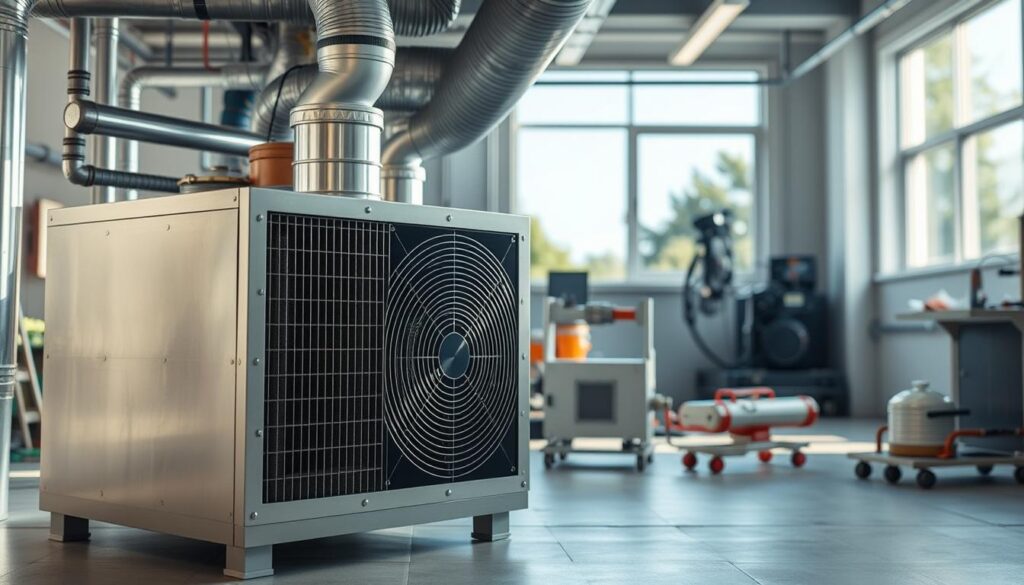
Air exchangers are key in managing humidity in commercial buildings. They keep the air inside fresh by swapping stale air with new air from outside.
Modern buildings often face issues with trapped moisture. This is because they are well-insulated. Air exchangers fix this by using two main types:
- Heat Recovery Ventilators (HRVs): Great for cold areas, they save heat during air exchange
- Energy Recovery Ventilators (ERVs): Best for humid places, they move both heat and moisture
These systems work by using two air ducts. One duct pulls out humid air from places like kitchens and bathrooms. The other duct brings in clean air to living areas. The core of the system transfers energy without mixing the air, saving up to 90% of energy.
Air exchangers are super helpful for controlling humidity in commercial buildings. They do many things:
- They take out extra moisture
- They filter out harmful particles
- They stop mold from growing
- They keep humidity at the right level
When it comes to managing moisture in HVAC systems, air exchangers are a great addition. They work best in new buildings, renovated spaces, and places with ongoing humidity problems.
Smart Thermostats and Humidity Sensors for Air Conditioning Monitoring
Modern technology has changed how we control indoor comfort. Smart thermostats with advanced humidity sensors have made home environmental management better. They give you more control over your living space.
Benefits of Automated Humidity Control
Smart thermostats do more than just control temperature. They offer complete indoor climate solutions. They track and regulate humidity with great precision.
- Real-time humidity monitoring across different home zones
- Automated triggers for dehumidification
- Energy-efficient operation
- Remote smartphone control and alerts
Setting Up Optimal RH Settings for HVAC
Setting up the right humidity levels for your HVAC needs planning. Your smart thermostat helps keep humidity between 40-50%. It adjusts to the season and your home’s environment.
| Season | Recommended RH Range | Key Considerations |
|---|---|---|
| Winter | 40-45% | Prevent window condensation |
| Summer | 45-55% | Maximize comfort, reduce AC load |
“Smart humidity sensors transform moisture management from guesswork to precision science.” – HVAC Technology Review
Choose a smart thermostat with humidity control modes and sensor integration. It should also offer detailed reports. These advanced devices give granular insights into your home’s environment. They help you create the perfect indoor climate.
Regular Maintenance Practices for Preventing Mold Growth in HVAC
Keeping your HVAC system in top shape is key to stopping mold and keeping air quality good. Good hvac moisture management starts with regular maintenance. This approach tackles humidity problems early on.
Regular maintenance is your best defense against mold and moisture issues. Here are important steps to prevent mold in hvac systems:
- Clean or replace air filters every 1-3 months
- Schedule annual professional system inspections
- Check and clean condensate drain lines quarterly
- Inspect evaporator coils for dust and debris
- Verify proper system drainage and moisture control
Key maintenance tasks include:
| Maintenance Task | Frequency | Purpose |
|---|---|---|
| Air Filter Replacement | Every 1-3 months | Improve air quality and system efficiency |
| Evaporator Coil Cleaning | Annually | Prevent moisture buildup and mold growth |
| Condensate Drain Line Maintenance | Quarterly | Ensure proper moisture drainage |
Professional maintenance plans offer complete protection for your HVAC system. These plans include detailed inspections, cleaning, and early detection of moisture issues. This helps prevent mold growth.
Investing in regular maintenance stops mold and boosts your system’s efficiency. It also extends your system’s life and keeps your home’s air clean. Remember, consistent care is the best way to manage moisture and keep your indoor environment healthy.
Conclusion
Learning how to keep RH in HVAC systems is key for a comfy and healthy home. Your first step is to see how important relative humidity is for your comfort and health.
Ideal relative humidity levels are vital for your home and health. By using the tips from this guide, you can control moisture, avoid damage, and make your home more comfy. The right mix includes choosing the right equipment, using smart tech, and regular upkeep.
Today’s HVAC tech makes controlling humidity easy. Smart thermostats with humidity sensors let you monitor and control humidity easily. Next, check your current humidity, spot any moisture issues, and talk to HVAC experts for advice.
Humidity control is a continuous effort. Seasons change, homes grow, and your HVAC needs regular checks. Stay ahead and informed to keep your home and family healthy and comfy.