Affiliate Disclosure
HVAC Guide Guys is a participant in the Amazon Services LLC Associates Program, an affiliate advertising program designed to provide a means for sites to earn advertising fees by advertising and linking to Amazon.
Are you tired of calling expensive technicians every time your home heating or cooling system acts up? What if you could become your own HVAC repair expert and save thousands of dollars in maintenance costs?
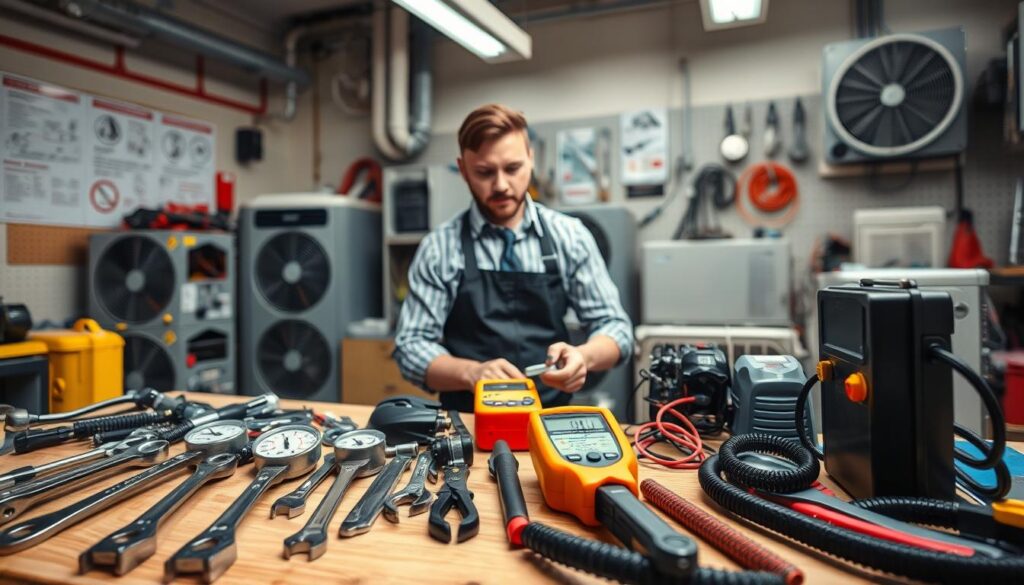
Learning HVAC repair is more accessible than you might think. This guide will walk you through everything you need to know about becoming an HVAC technician or mastering home system maintenance. Whether you’re looking to start a professional career or simply want to understand your home’s complex heating and cooling systems, you’ll find practical insights here.
HVAC technician courses offer multiple pathways for learning these critical skills. From vocational training to online resources, learning HVAC repair has never been more flexible. The growing demand for skilled professionals makes this an exciting time to enter the field.
Key Takeaways
- HVAC repair skills can lead to a stable, well-paying career
- Multiple educational paths are available for aspiring technicians
- Basic home maintenance can save significant repair costs
- Certification programs provide structured learning opportunities
- Understanding HVAC systems enhances home comfort and efficiency
Table of Contents
Understanding What HVAC Systems Are and Why Learning Repair Skills Matters
HVAC systems are key to keeping homes comfortable in the U.S. Learning about them can lead to new career paths and better home upkeep. This guide will cover everything you need to know about HVAC systems.
What Does HVAC Stand For?
HVAC stands for Heating, Ventilation, and Air Conditioning. These systems control temperature, air quality, and humidity. Your home’s HVAC includes:
- Furnace or heating unit
- Air conditioning system
- Ductwork for air circulation
- Air filtration system
The Growing Demand for HVAC Technicians
The need for HVAC experts is growing fast. Here are some facts:
- 93% of new homes in the U.S. have air conditioning
- Over 99% of new homes in southern states have HVAC systems
- There’s always a high demand for skilled technicians
Benefits of Learning HVAC Repair Skills
Getting HVAC certified can boost your career and home upkeep. Learning these skills can help you:
- Save on home maintenance costs
- Find new career opportunities
- Gain technical knowledge
- Make your home more energy-efficient
HVAC repair is a field full of opportunities. With the right training, you can turn your knowledge into a fulfilling career or a useful skill for home maintenance.
Explore Our HVAC Shop
Looking for top-rated HVAC tools, parts, and accessories? Visit our shop and find the perfect solution for your needs.
Visit the ShopEssential HVAC Components Every Beginner Should Know
Starting with refrigeration repair basics means knowing the main parts of HVAC systems. You’ll learn about the key components that keep your home cool and comfortable.
Let’s look at the main parts you’ll find in HVAC systems:
- Refrigerant: The magical chemical that absorbs heat and enables cooling
- Evaporator Coils: Copper tubing where heat absorption happens
- Compressor: The heart of the system that pressurizes refrigerant
- Condenser: Outdoor unit that releases absorbed heat
- Furnace/Heat Pump: Generates heating and cooling
Knowing these parts is key for anyone starting in refrigeration repair. The refrigeration cycle is a complex process of heat transfer. It involves several stages:
- Refrigerant enters the compressor as a low-pressure gas
- Compressor increases pressure and temperature
- Hot gas moves to condenser coils
- Refrigerant releases heat and becomes liquid
- Expansion valve reduces pressure
- Refrigerant absorbs indoor heat in evaporator coils
“Knowledge of HVAC components is the first step to becoming a skilled technician.” – HVAC Professional
By learning these basics, you’ll build a strong foundation. You’ll understand how HVAC systems work and how to spot problems.
How to Learn HVAC Repair Through Different Educational Pathways
Starting a career in HVAC needs careful planning. You’ll explore many learning paths to become a skilled technician. These paths fit different learning styles and career goals.
Knowing the various educational options helps you choose the right path for your HVAC career.
HVAC Certification Programs and Vocational Training Options
HVAC certification programs offer structured learning. They include:
- Hands-on technical training
- Classroom instruction on system components
- Safety protocols and industry standards
- Practical skill development
Technical schools and community colleges provide tough training. They prepare you for HVAC challenges. You learn about heating, cooling, and ventilation systems through detailed coursework.
Online HVAC Repair Classes and Self-Paced Learning Resources
Digital learning has changed education. Online hvac repair classes offer flexible learning. They are great for those balancing work and school. Key benefits include:
- Convenient scheduling
- Interactive video demonstrations
- Virtual system simulations
- Self-directed learning pace
Pro tip: Add practical experience to online learning to boost your skills.
HVAC Apprenticeship Opportunities for Hands-On Experience
HVAC apprenticeships offer deep learning. They mix theory with practical training from experts. Apprenticeships last 3-5 years and cover:
- Residential and commercial system maintenance
- Seasonal repair techniques
- Customer service skills
- Professional networking
By exploring these educational paths, you can tailor your HVAC technician training. This matches your learning style and career dreams.
Explore Our HVAC Shop
Looking for top-rated HVAC tools, parts, and accessories? Visit our shop and find the perfect solution for your needs.
Visit the ShopMastering the Fundamentals of Heating and Cooling Systems
It’s key to know the basics of heating and cooling systems for good maintenance skills. The HVAC world is all about moving heat and managing energy.
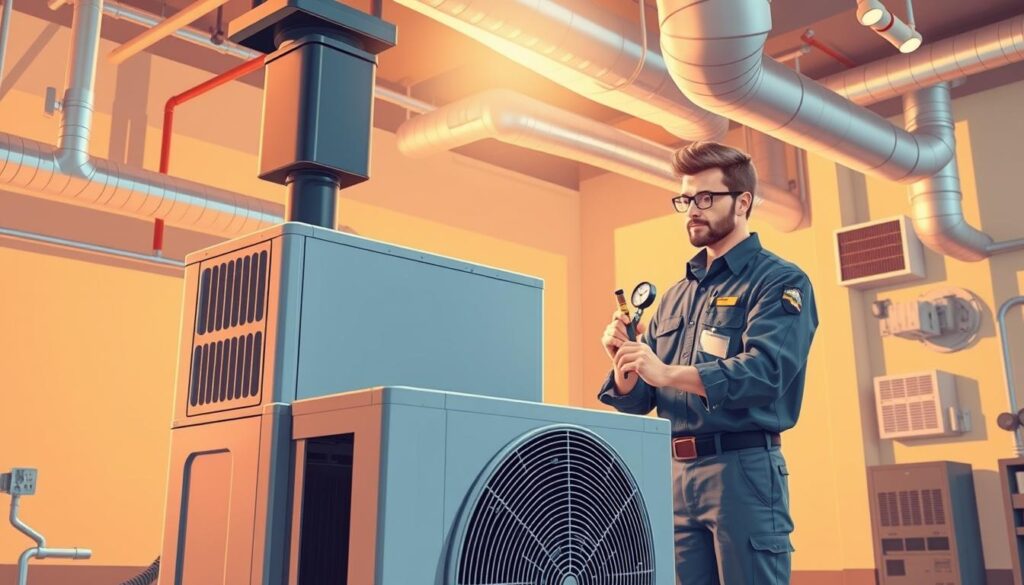
The refrigeration cycle is at the core of HVAC systems. It’s a cool process that moves heat from one place to another. This cycle works by expanding a liquid into a gas, which takes heat from around it.
- Refrigerant continuously cycles between liquid and gas states
- Heat absorption occurs during the expansion process
- Energy transfer happens through precise pressure changes
Learning about different HVAC systems will boost your maintenance skills. There are many types for homes and businesses:
- Central Split Systems
- Ductless Mini-Split Systems
- Hybrid Split Systems
- Packaged HVAC Systems
- Geothermal HVAC Systems
Knowing about British Thermal Units (BTUs) is vital. BTUs measure heat, and HVAC systems use tons to show their power. One ton is 12,000 BTUs per hour.
Grasping these basics will help you fix and keep HVAC systems better. Your skills will be a big help in understanding these complex systems.
DIY HVAC Troubleshooting Techniques for Common Problems
Learning how to troubleshoot your HVAC system can save you a lot of time and money. It also helps avoid frustration. Knowing how to spot common problems lets you fix small issues before they get big.
When you’re troubleshooting your HVAC, focus on a few key areas. Knowing what to look for helps you fix minor problems before they turn into big repairs.
Identifying Strange Noises and Their Meanings
Different sounds from your HVAC system can mean different things:
- Banging: This might mean loose parts or ductwork issues.
- Rattling: It could be debris in the blower or loose panels.
- Whistling: This usually means airflow problems or a dirty filter.
- Grinding: It might be a motor bearing issue.
Addressing Airflow and Temperature Challenges
| Symptom | Potential Cause | DIY Solution |
|---|---|---|
| Weak Airflow | Dirty Air Filter | Replace Filter |
| Uneven Room Temperatures | Blocked Vents | Clear Vent Obstructions |
| High Energy Bills | System Inefficiency | Clean Coils, Check Insulation |
When to Call a Professional
Some HVAC problems are too complex for DIY fixes. Know when to call a pro:
- Refrigerant leaks
- Electrical component failures
- Complex mechanical issues
- Gas connection problems
Always put safety first when doing HVAC maintenance. If you’re not sure about a repair, it’s best to get help from a licensed HVAC technician.
Explore Our HVAC Shop
Looking for top-rated HVAC tools, parts, and accessories? Visit our shop and find the perfect solution for your needs.
Visit the ShopExplore Our HVAC Shop
Looking for top-rated HVAC tools, parts, and accessories? Visit our shop and find the perfect solution for your needs.
Visit the ShopGetting Your EPA Certification for HVAC and Other Required Credentials
Getting an EPA certification for HVAC is key to becoming a pro HVAC tech. The Environmental Protection Agency (EPA) requires certain certifications. These ensure safe refrigerant handling and protect the environment.
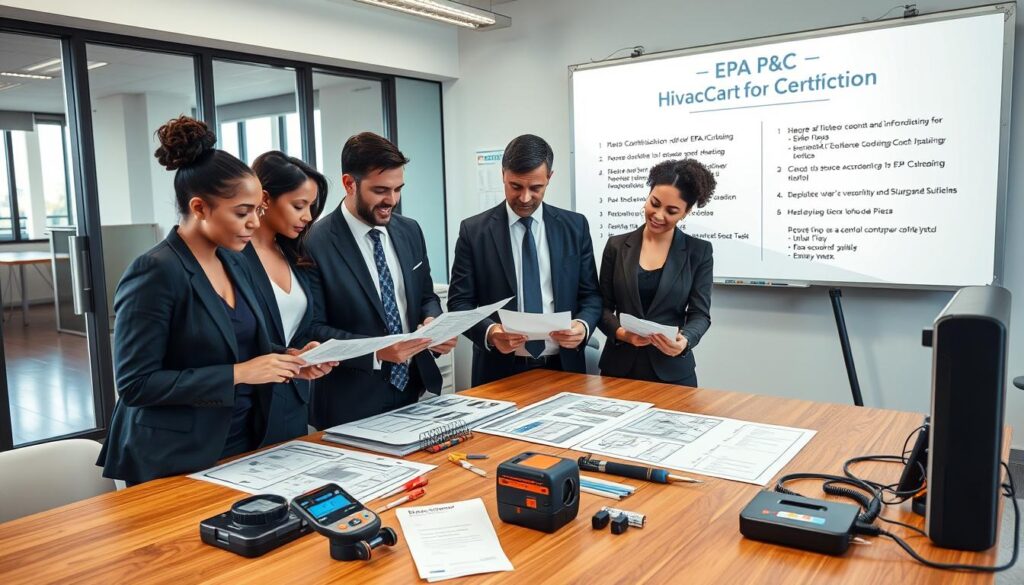
The EPA 608 Certification is the main credential for HVAC pros. It comes in four types:
- Type I: Small appliances
- Type II: High-pressure refrigerants
- Type III: Low-pressure refrigerants
- Universal: Covers all refrigerant types
To get your EPA certification for HVAC, you must pass a detailed exam. It tests your knowledge of:
- Refrigerant characteristics
- Recovery procedures
- Safety protocols
- Environmental regulations
| Certification | Key Requirements | Career Impact |
|---|---|---|
| EPA 608 | Refrigerant handling exam | Legal requirement for HVAC work |
| NATE Certification | Technical competence test | Enhanced professional credibility |
| Manufacturer Certifications | Brand-specific training | Specialized equipment expertise |
Consider getting more than just EPA certification. NATE (North American Technician Excellence) and manufacturer-specific certifications are also valuable. They show you’re an expert in HVAC.
Investing in professional certifications is an investment in your future career success.
Don’t forget to check your state’s licensing rules. Requirements can differ. Some places might need extra qualifications for HVAC pros.
Building Your HVAC Repair Skills Through Practical Maintenance Tasks
Learning practical maintenance skills is key for those interested in HVAC repair. Doing hands-on tasks can save you money and improve your understanding of your home’s systems. This section will show you important maintenance tasks you can do at home.
Air Conditioning Repair Training Fundamentals
Air conditioning repair training begins with knowing basic parts and maintenance methods. Here are essential skills to learn:
- Cleaning evaporator and condenser coils
- Checking refrigerant levels
- Identifying possible refrigeration repair basics
- Inspecting electrical connections
Heating System Maintenance Skills for Home Practice
Learning to maintain your heating system can make your home cozy and save energy. Focus on these practical tasks:
- Regularly replace furnace filters
- Inspect heat exchangers for damage
- Clean flame sensors and burners
- Test thermostat functionality
| Maintenance Task | Frequency | Difficulty Level |
|---|---|---|
| Air Filter Replacement | Every 1-3 months | Easy |
| Coil Cleaning | Annually | Moderate |
| Electrical Connection Check | Twice a year | Advanced |
While these skills are useful, always know your limits. Some repairs need a pro, like refrigerant work or complex electrical tasks. Safety is always first when doing HVAC maintenance.
Pro Tip: Invest in basic tools and protective gear before attempting any maintenance procedures.
Career Opportunities and Advancement in the HVAC Industry
The HVAC industry is full of exciting career paths for those who finish hvac technician courses. It’s a field that offers many ways to grow and succeed. Whether it’s working in homes or big buildings, skilled technicians are always needed.
Starting out, you might join an apprenticeship program. Here, you’ll learn by doing, working with experienced pros. Your first jobs could be:
- Residential HVAC technician
- Commercial system installer
- Maintenance specialist
- Service assistant
As you learn more, you can move into more specialized roles. Refrigeration technicians, control systems specialists, and industrial HVAC engineers are just a few examples of advanced positions.
Your salary will also increase as you gain experience and get more certifications. Beginners usually make $35,000 to $45,000 a year. But, with more experience, you could earn $60,000 to $80,000. Starting your own business could even lead to incomes over $100,000.
The HVAC industry offers stable jobs with good security. With buildings always needing upkeep, your skills will always be in demand. Keeping up with new courses helps you stay ahead in this changing field.
Conclusion
Learning HVAC repair is an exciting journey. It opens doors to many opportunities. You’ve learned about heating, cooling, and ventilation systems. This knowledge is valuable in a dynamic and essential industry.
The skills you gain can change your career or help you keep your home comfortable. Your path to learning HVAC repair is unique. You might choose vocational training, online courses, or apprenticeships.
Each step brings you closer to becoming an expert. Remember, mastering HVAC repair takes patience, practice, and a commitment to learning. The field changes fast, so staying curious and adaptable is key.
Start by looking into local certification programs or online resources. Practice basic maintenance tasks. Also, connect with professional HVAC technicians for advice. Learning these skills can lead to job security, career growth, and solving complex problems.
The HVAC industry is waiting for your talent and dedication. With each new skill, you build a strong foundation for a rewarding career. Embrace the learning, stay motivated, and watch your expertise grow. This will open doors to exciting opportunities in a critical field.
FAQ
How long does it take to become a certified HVAC technician?
How much does it cost to learn HVAC repair?
How long does it take to become a certified HVAC technician?
How much does it cost to learn HVAC repair?
FAQ
How long does it take to become a certified HVAC technician?
The time it takes to become a certified HVAC technician varies. Vocational training programs last 6-24 months. Apprenticeships can take 3-5 years. Online certification courses can be finished in 3-6 months, but you’ll need hands-on training too.
How much does it cost to learn HVAC repair?
Costs vary a lot. Community college and vocational programs cost
FAQ
How long does it take to become a certified HVAC technician?
The time it takes to become a certified HVAC technician varies. Vocational training programs last 6-24 months. Apprenticeships can take 3-5 years. Online certification courses can be finished in 3-6 months, but you’ll need hands-on training too.
How much does it cost to learn HVAC repair?
Costs vary a lot. Community college and vocational programs cost $1,500 to $15,000. Online courses are cheaper, at $500-$3,000. Apprenticeships are often less expensive because you earn while you learn. Some employers also offer to pay for your training.
Do I need special tools to start learning HVAC repair?
Yes, you’ll need basic tools like a multimeter and refrigeration manifold gauge set. You’ll also need screwdrivers, wire cutters, and safety gear. Many programs give you a list of tools to start with. You can add more as you learn.
Is HVAC repair a good career for someone who wants to work with their hands?
Absolutely! HVAC repair is perfect for hands-on learners. It combines technical skills with physical work. You’ll solve problems and work with mechanical systems, making it a rewarding career.
What are the physical requirements for an HVAC technician?
HVAC technicians need to be physically fit. They lift heavy equipment, work in tight spaces, and climb ladders. Being flexible and able to work in different weather is key.
Can I learn HVAC repair entirely online?
Online courses are great for learning theory, but you need hands-on experience. Most programs recommend combining online learning with in-person labs or apprenticeships. This way, you get the skills you need for certification.
What is the EPA 608 Certification, and why is it important?
The EPA 608 Certification is needed for technicians who handle refrigerants. It shows they know how to handle refrigerants safely. There are four types: Type I, II, III, and Universal, with Universal being the most complete.
How much can I expect to earn as an HVAC technician?
New HVAC technicians earn $35,000-$45,000 a year. Experienced ones can make $60,000-$80,000. Starting your own business or specializing can lead to earning over $100,000.
What are the most challenging aspects of learning HVAC repair?
Learning HVAC repair is tough. You need to understand electrical systems and refrigeration physics. Keeping up with new technology and developing diagnostic skills are also big challenges. Safety and continuous learning are also important.
Are there opportunities for specialization in HVAC?
Yes! You can specialize in many areas like residential or commercial work, refrigeration, or smart home integration. Each area offers unique career paths and higher earning potentials.
,500 to ,000. Online courses are cheaper, at 0-,000. Apprenticeships are often less expensive because you earn while you learn. Some employers also offer to pay for your training.
Do I need special tools to start learning HVAC repair?
Yes, you’ll need basic tools like a multimeter and refrigeration manifold gauge set. You’ll also need screwdrivers, wire cutters, and safety gear. Many programs give you a list of tools to start with. You can add more as you learn.
Is HVAC repair a good career for someone who wants to work with their hands?
Absolutely! HVAC repair is perfect for hands-on learners. It combines technical skills with physical work. You’ll solve problems and work with mechanical systems, making it a rewarding career.
What are the physical requirements for an HVAC technician?
HVAC technicians need to be physically fit. They lift heavy equipment, work in tight spaces, and climb ladders. Being flexible and able to work in different weather is key.
Can I learn HVAC repair entirely online?
Online courses are great for learning theory, but you need hands-on experience. Most programs recommend combining online learning with in-person labs or apprenticeships. This way, you get the skills you need for certification.
What is the EPA 608 Certification, and why is it important?
The EPA 608 Certification is needed for technicians who handle refrigerants. It shows they know how to handle refrigerants safely. There are four types: Type I, II, III, and Universal, with Universal being the most complete.
How much can I expect to earn as an HVAC technician?
New HVAC technicians earn ,000-,000 a year. Experienced ones can make ,000-,000. Starting your own business or specializing can lead to earning over 0,000.
What are the most challenging aspects of learning HVAC repair?
Learning HVAC repair is tough. You need to understand electrical systems and refrigeration physics. Keeping up with new technology and developing diagnostic skills are also big challenges. Safety and continuous learning are also important.
Are there opportunities for specialization in HVAC?
Yes! You can specialize in many areas like residential or commercial work, refrigeration, or smart home integration. Each area offers unique career paths and higher earning potentials.