
Affiliate Disclosure
HVAC Guide Guys is a participant in the Amazon Services LLC Associates Program, an affiliate advertising program designed to provide a means for sites to earn advertising fees by advertising and linking to Amazon.
Ever wondered why your HVAC system isn’t working its best? What if a simple vacuum gauge could unlock its full power?
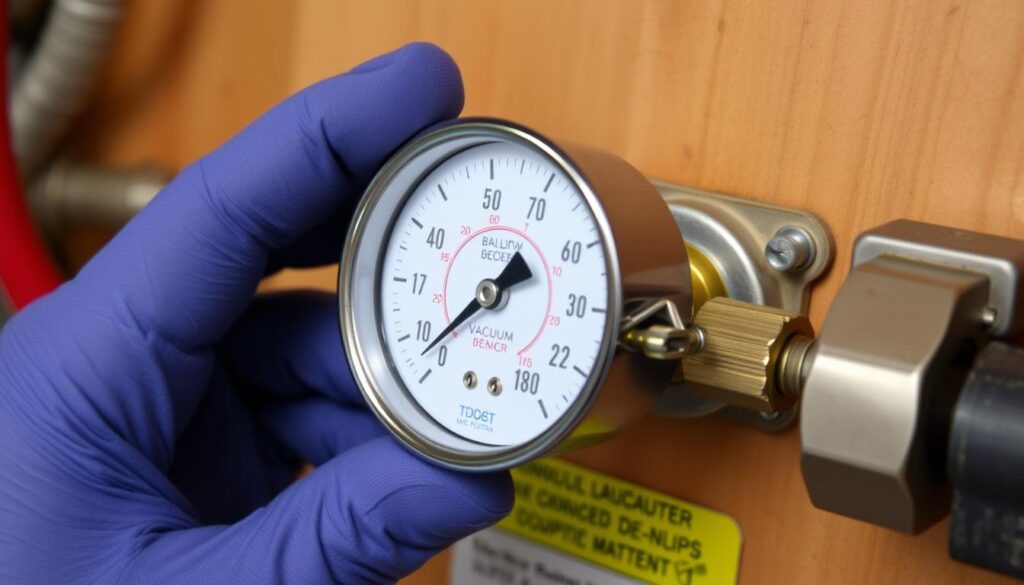
Professional HVAC technicians say precise vacuum measurements are key for system performance and life. Hooking up a vacuum gauge might seem hard, but with the right info, you can learn it fast.
This guide will show you how to connect a vacuum gauge to your HVAC system. You’ll learn from the basics to advanced diagnostics. You’ll know how to keep your cooling and heating systems running well.
Key Takeaways
- Vacuum gauges are critical for HVAC system performance
- Proper installation requires specific tools and techniques
- Micron measurements provide precise system diagnostics
- Regular vacuum testing prevents system failures
- Understanding gauge readings improves system efficiency
Table of Contents
Understanding the Importance of Vacuum Gauges in HVAC Systems
HVAC systems need precise measurements and expert skills to work well. Vacuum gauges are key to keeping your system running smoothly. They help technicians find and fix problems early, saving you money.
Working with refrigeration systems means knowing about vacuum measurements well. Vacuum gauges give technicians important info for better diagnosis and upkeep.
Why Technicians Depend on Vacuum Gauges
HVAC pros use vacuum gauges for many important reasons:
- They find system leaks accurately
- They remove moisture and bad stuff
- They check if the refrigerant system works right
- They stop equipment damage
Micron Measurements: The Key to System Efficiency
Micron measurements show how well an HVAC system is doing. Lower micron readings mean a cleaner, better system. Technicians use these exact measurements to:
- Make sure all moisture is gone
- Check if evacuation was done right
- See if the system is ready for refrigerant
Knowing about micron levels stops system failures and keeps equipment reliable for a long time. With advanced vacuum gauges, your HVAC system will run at its best.
Explore Our HVAC Shop
Looking for top-rated HVAC tools, parts, and accessories? Visit our shop and find the perfect solution for your needs.
Visit the ShopEssential Tools and Equipment for Vacuum Gauge Installation
Getting the right tools is key when installing a vacuum gauge for your HVAC system. Professional technicians know that quality equipment is vital. It helps get accurate measurements and ensures the system works well.
- Digital or analog vacuum gauge
- Vacuum pump
- Manifold gauge set
- Refrigerant hoses
- Micron gauge
- Vacuum rated adapters and fittings
Choosing high-quality instruments is important. It helps avoid system problems. Professional-grade vacuum gauges usually have:
- Accuracy within ±1% of full scale
- Digital display with clear micron readings
- Durable construction for field use
- Multiple measurement units
“Invest in good tools, and they’ll invest in your professional reputation.” – HVAC Professional Wisdom
When picking your vacuum gauge, think about its resolution, accuracy, and if it fits your HVAC system. Digital gauges give more precise readings than analog ones.
Don’t forget, keeping your tools calibrated and maintained is as critical as choosing them. Regular checks and updates ensure your tools work well every time you service an HVAC system.
Understanding HVAC Gauge Components and Their Functions
Learning about HVAC gauge components is key for accurate system checks and upkeep. Knowing these tools well can greatly improve your system’s performance and efficiency.
Gauge manifolds are advanced tools for monitoring and managing refrigeration systems. They have three main parts: the low-pressure chamber, high-pressure chamber, and utility chamber.
Gauge Manifold Chambers Explored
Each part of the manifold is vital for checking the system:
- The low-pressure chamber connects to the suction line, measuring system pressures on the intake side
- The high-pressure chamber monitors discharge line pressures and liquid line conditions
- The utility chamber provides versatile connections for adding refrigerant or connecting diagnostic equipment
Analog vs Digital Readout Gauges
Technicians can choose from two main gauge types, each with its own features:
| Analog Gauges | Digital Gauges |
|---|---|
| Needle-based indicator | Numerical digital display |
| Traditional design | Modern technological approach |
| Preferred by experienced technicians | Provides precise numerical readings |
| Potential for human error | Enhanced accuracy |
“Understanding your gauge’s capabilities is the first step to accurate HVAC system diagnostics.”
Color-coded hoses prevent mix-ups: blue for low-pressure lines (0-99.9 psi), and red for high-pressure lines (up to 999 psi). Correct hose use ensures safe and accurate pressure readings.
Explore Our HVAC Shop
Looking for top-rated HVAC tools, parts, and accessories? Visit our shop and find the perfect solution for your needs.
Visit the ShopWhy Pulling a Deep Vacuum Matters for Your HVAC System
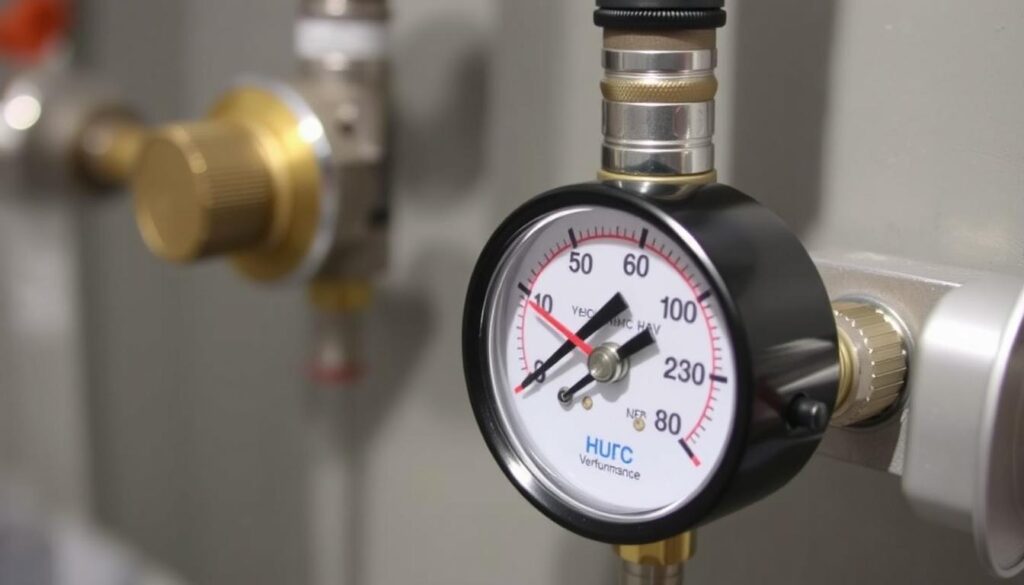
Deep vacuum is key for your HVAC system’s health. It prevents expensive fixes and boosts performance. By pulling a deep vacuum, you clear out air and remove all contaminants.
At this vacuum level, water boils at -12°F. This means even tiny amounts of moisture can be sucked out. The difference between 500 and 1,000 microns is huge. At 1,000 microns, water boils at 1°F. This lets moisture stay in areas that don’t get this hot during evacuation.
- Removes all moisture and non-condensable gases
- Prevents system corrosion
- Extends equipment lifespan
- Improves system efficiency
Setting up your refrigeration micron gauge right lets you hit deep vacuum levels. Removing all contaminants boosts your HVAC system’s lifespan and efficiency.
Investing time in proper evacuation pays dividends through reduced callbacks and increased customer satisfaction.
Your hard work in vacuum pulling makes your HVAC system reliable, efficient, and long-lasting. It works at its best.
How to Hook Up a Vacuum Gauge HVAC
Setting up a vacuum gauge for your HVAC system needs care and precision. It’s key for accurate system checks and top performance. This guide will show you how to connect your vacuum gauge with ease.
Identifying the Correct Ports and Hose Connections
Finding the right service ports is essential for a good vacuum gauge setup. Your HVAC unit has ports on the suction and liquid lines near the condenser.
- Match the blue low-pressure hose to the larger suction line service port
- Verify connections are hand-tight with a quarter turn using a wrench
- Avoid over-tightening to prevent damage
Manifold Port and Vacuum Gauge Placement
Connecting your vacuum gauge needs careful placement for accurate readings. The center yellow port connects to your vacuum pump or refrigerant supply.
| Port Color | Connection Purpose |
|---|---|
| Blue | Low-pressure side connection |
| Red | High-pressure side connection |
| Yellow | Vacuum pump or refrigerant supply |
Pro Tip: Never place your vacuum gauge near the vacuum pump. The pump might show 20 microns at its location, but the system could have much higher pressure due to restrictions.
For the best results, place the vacuum gauge as far back on the system as you can. Use service port adapters to mount the gauge directly on the system. This way, you get the most accurate readings. It ensures you measure vacuum at the spot that will be last to reach your 500-micron target.
Eliminating Flow Restrictions for Optimal Vacuum Performance
To get the fastest vacuum in HVAC systems, you need a smart plan. It’s all about picking the right equipment and installing it right. This way, you can make your evacuation process better.
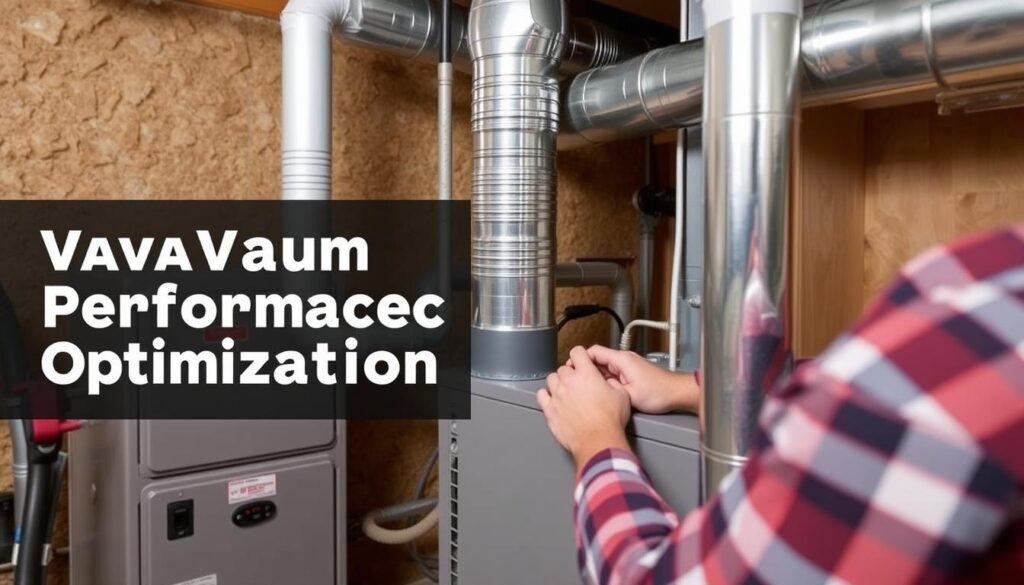
- Shortest hose length possible
- Largest hose diameter available
- Completely removed valve cores
Flow restrictions can really slow down your vacuum. These include:
- Manifold gauge internal passages
- Ball valves with narrow openings
- Restrictive adapters
To cut down on these restrictions, try these tips:
| Restriction Type | Mitigation Strategy |
|---|---|
| Manifold Passages | Use high-flow manifold gauges |
| Ball Valves | Select full-port ball valves |
| Adapters | Use minimal adapters with wide internal diameters |
Advanced technicians suggest using multiple connection points. Connect to both suction and liquid line service ports when you can. This method cuts down the time to reach your target vacuum level a lot.
Pro Tip: Every millimeter of restriction can add significant time to your evacuation process.
By following these steps, you’ll make your vacuum work better. This means your HVAC system will be ready faster.
Reading and Interpreting Vacuum Pressure Measurements
Understanding vacuum pressure is key for HVAC techs to check system health. Knowing how to read micron values is vital. It can make a big difference in system success or failure.
During a vacuum test, you’ll see various pressure situations. It’s important to know what they mean:
Understanding Normal Micron Fluctuations
Micron readings tell a lot about your HVAC system’s state. Here are some key points:
- If your micron value goes up quickly and continuously to 760,000 microns, you probably have a leak.
- Slowly rising pressure and then stabilizing over 1,000 microns means there’s moisture in the system.
- Normal evacuation shows gradual pressure changes.
Recognizing the Difference Between Outgassing and Leaks
It’s important to tell apart normal outgassing and real leaks:
- Bubbles in the sight glass can be from:
- Moisture evaporation (normal)
- Residual oil with moisture in the manifold block
- Fixing it might involve flushing with:
- Rubbing alcohol
- RX11 flush
“Accurate vacuum measurement is the cornerstone of effective HVAC system maintenance.”
By learning these skills, you can confidently find and fix problems in HVAC systems.
Explore Our HVAC Shop
Looking for top-rated HVAC tools, parts, and accessories? Visit our shop and find the perfect solution for your needs.
Visit the ShopTroubleshooting Common Vacuum Gauge Connection Issues
Professional HVAC technicians know that successful system evacuation depends on precise gauge connections and careful preparation. When setting up your vacuum gauge, critical steps can prevent costly mistakes and ensure system integrity.
Your vacuum gauge placement matters a lot. Always place your vacuum gauge as far back on the system as possible, ideally directly on a service port. This ensures the most accurate pressure readings and avoids measurement errors.
- Check hose pressure ratings before connection
- Verify color-coding (blue for low pressure, red for high pressure)
- Inspect valve cores and replacement availability
- Test gauge accuracy regularly
Dangerous connection errors can compromise safety and system performance. Incorrect hose connections risk catastrophic failures. This is because technicians might connect high-pressure refrigerant sources to low-pressure rated hoses. Such mistakes can cause hose rupture and injury.
Digital and analog gauges present unique challenges. Analog gauges might lose calibration over time, requiring professional recalibration. Digital gauges can display error codes or inaccurate readings due to low batteries or sensor contamination.
Adapter and fitting compatibility is another critical consideration. Not all service ports use standard Schrader valve fittings. Older systems or specialty equipment might require specific adapters for proper connection.
Your systematic troubleshooting approach: Check connections, verify gauge placement, confirm hose connections, manage valve cores, test gauge accuracy, and verify fitting compatibility.
Performing a Standing Vacuum Test and Triple Evacuation
Professional HVAC technicians know that proper system evacuation is key for long-term performance. The triple evacuation method is a detailed way to remove moisture and ensure system integrity.
The triple evacuation process involves several steps to get rid of moisture and contaminants from your HVAC system:
- First vacuum cycle: Pull down to 1,000-2,000 microns
- Introduce dry nitrogen at 3-5 PSIG for five minutes
- Second evacuation: Pull down to 500 microns
- Third cycle: Pull down to 300 microns
- Final nitrogen introduction and evacuation
Understanding the Triple Evacuation Method
Each nitrogen flush helps remove moisture from system components. This method targets hidden moisture in oils, insulation, and other materials that standard evacuation might miss.
Proper Isolation and Testing Procedures
When conducting a standing vacuum test, follow these critical steps:
- Reach target vacuum level (500 microns or lower)
- Close system valve (not just manifold)
- Shut off vacuum pump
- Monitor vacuum level for at least 10 minutes
Interpreting results is key. A successful evacuation shows a vacuum that:
- Holds steady
- Rises less than 100 microns in 10 minutes
- Indicates a leak-free system
Remember: Spending an extra 10-15 minutes on thorough testing prevents costly system failures and callbacks.
Skipping or rushing this process can lead to premature system damage and expensive repairs. Take the time to perform a complete standing vacuum test for the best HVAC system performance.
Conclusion
Learning to hook up a vacuum gauge is more than a skill—it’s a commitment to excellence. It shows you care about your work and want to do it right. By understanding vacuum gauges, you’re showing you’re serious about being the best HVAC technician.
Getting the right tools and knowing how gauge components work is key. Making the right connections is also important. With practice, these steps become easier and more natural.
Success comes from accurately reading measurements and fixing any issues. You also need to do thorough vacuum tests. Each step you take helps your system work better and makes customers happy.
Always follow the manufacturer’s guidelines for vacuum levels and procedures. Different systems and refrigerants need different approaches. Staying up-to-date is essential.
Being dedicated to HVAC skills and following best practices makes you stand out. It shows you’re more than just a maintenance person. You’re a professional who cares about quality.
Use this knowledge on your next service call. Be confident in your ability to hook up a vacuum gauge. Your careful work will make a big difference in system reliability. It shows you’re a skilled technician who values quality.