Affiliate Disclosure
HVAC Guide Guys is a participant in the Amazon Services LLC Associates Program, an affiliate advertising program designed to provide a means for sites to earn advertising fees by advertising and linking to Amazon.
Starting a career in the heating, ventilation, and air conditioning field in the Commonwealth is a promising path. The state currently employs over 13,500 skilled professionals in this vital trade. With a projected growth rate, opportunities for qualified individuals are expanding.
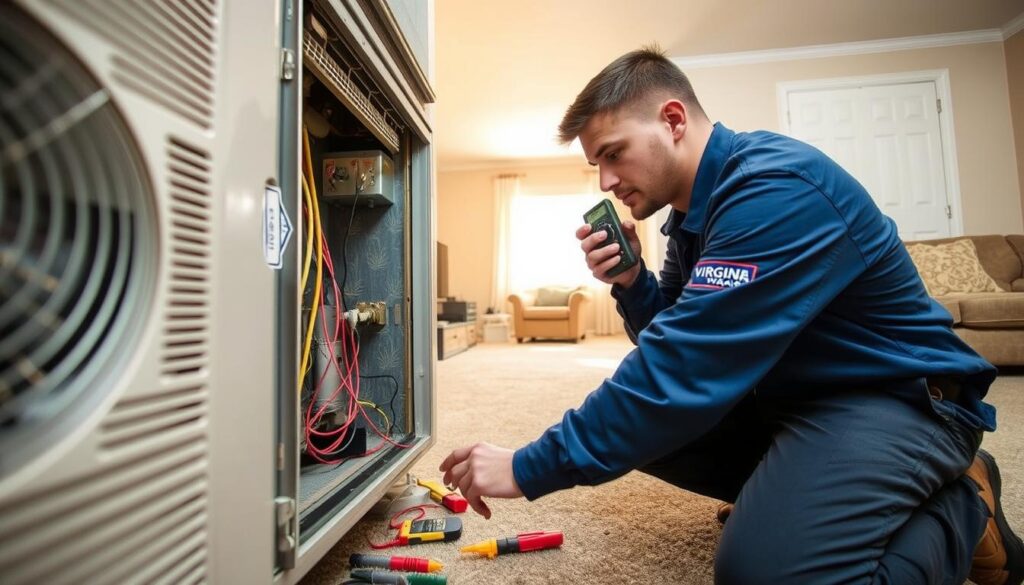
State law mandates proper credentialing for anyone performing this work independently. This legal requirement ensures high standards of safety and quality for consumers. The Department of Professional and Occupational Regulation (DPOR) and the Board for Contractors oversee the entire process.
Modern systems are increasingly complex, focusing on energy efficiency and advanced technology. This evolution creates a consistent demand for experts who can install, maintain, and repair these units. Becoming a licensed tradesman opens the door to a stable and rewarding career.
This guide provides a clear roadmap for your journey. We will cover the necessary education, required experience, examination details, and the different credential types available. You will learn the complete steps from beginning your training to achieving full state approval.
Key Takeaways
- Proper state credentialing is legally required to work independently in this field.
- The DPOR and the Board for Contractors manage the regulatory process in Virginia.
- The industry is experiencing significant growth, creating strong job prospects.
- Modern heating and air conditioning systems demand highly skilled professionals.
- The path involves meeting specific education, experience, and examination requirements.
- This guide outlines the complete process from start to finish.
Table of Contents
Understanding HVAC Licensing in Virginia
A strong demand for qualified professionals defines the current environment for mechanical systems specialists across the state. The Virginia HVAC industry employs over 13,500 individuals, with a projected 6% growth rate creating new opportunities.
This growth occurs alongside a significant national labor shortage. A recent industry survey found that 100% of firms in the state reported unfilled hourly craft positions. This trend highlights exceptional job security for skilled technicians.
Overview of the HVAC Industry in Virginia
Nationally, there are over 441,000 professionals in this field. Virginia’s market is a vital part of this larger network. The consistent need for installing and servicing complex air conditioning and heating systems drives this stability.
Modern units focus on energy efficiency and advanced technology. This evolution requires a highly trained workforce. Entering this sector now positions you for a long-term, rewarding career.
Importance of Licensing for Technicians and Contractors
State law mandates proper credentialing for anyone performing this work independently. This legal requirement is not just a formality. It serves as proof of your experience and skill to employers and customers.
Holding a credential unlocks significant professional advantages. It allows you to operate a business, pull building permits, and bid on government projects. This formal recognition often leads to higher earning potential.
Ultimately, licensing protects everyone involved. It ensures all work meets the Virginia Uniform Statewide Building Code. This guarantees safety and quality for the public.
| Benefit Category | For the Technician | For the Customer |
|---|---|---|
| Legal Compliance | Ability to work independently and legally | Assurance of code-compliant installations |
| Business Operations | Right to advertise, obtain insurance, and pull permits | Access to insured and bonded professionals |
| Career Advancement | Eligibility for higher wages and public project bids | Confidence in a skilled and verified expert |
Explore Our HVAC Shop
Looking for top-rated HVAC tools, parts, and accessories? Visit our shop and find the perfect solution for your needs.
Visit the ShopLicensing Requirements for HVAC Technicians in Virginia
Entering the skilled trades in Virginia involves meeting specific state-mandated prerequisites for professional practice. The Department of Professional and Occupational Regulation (DPOR) outlines these foundational criteria. You must build your career on this solid base of qualifications.
Your journey begins with the basics. You need to be at least 18 years old. A high school diploma or GED is also a mandatory starting point.
Education, Certification, and Work Experience
The state requires a blend of formal education, hands-on experience, and successful examination. This combination ensures comprehensive skill development. One common pathway involves 240 hours of vocational training paired with four years of supervised work.
Alternative routes may allow additional years of practical experience to substitute for classroom hours. This flexibility acknowledges diverse learning backgrounds.
A critical component is EPA certification for handling refrigerants. This separate credential proves your understanding of vital safety and environmental protocols. It is non-negotiable for working with modern systems.
“Proper credentialing is not merely a formality; it is the bedrock of public trust and professional competency in the technical trades.”
State Regulations and Local Ordinances
The Board for Contractors establishes and enforces the statewide standards for all tradesmen. This system guarantees consistent quality and safety for consumers across Virginia.
It is crucial to remember that local rules may also apply. Individual localities might have additional requirements. Always check with the specific community where you plan to work.
| Pathway Focus | Formal Education | Practical Experience |
|---|---|---|
| Vocational Training | 240 instructional hours | 4 years under supervision |
| Experience-Based | Reduced hours | Additional years required |
| Apprenticeship | Integrated program | On-the-job training included |
Finally, you must complete administrative steps. This includes providing a physical home address for your application. You will also need to pay all relevant examination and credential fees.
Explore Our HVAC Shop
Looking for top-rated HVAC tools, parts, and accessories? Visit our shop and find the perfect solution for your needs.
Visit the ShopThe Types of HVAC Licenses and Credentials in Virginia
Virginia’s credentialing system offers a clear career ladder for mechanical systems professionals. You progress through distinct levels as your skills and responsibilities grow. Each step unlocks new opportunities in the trade.
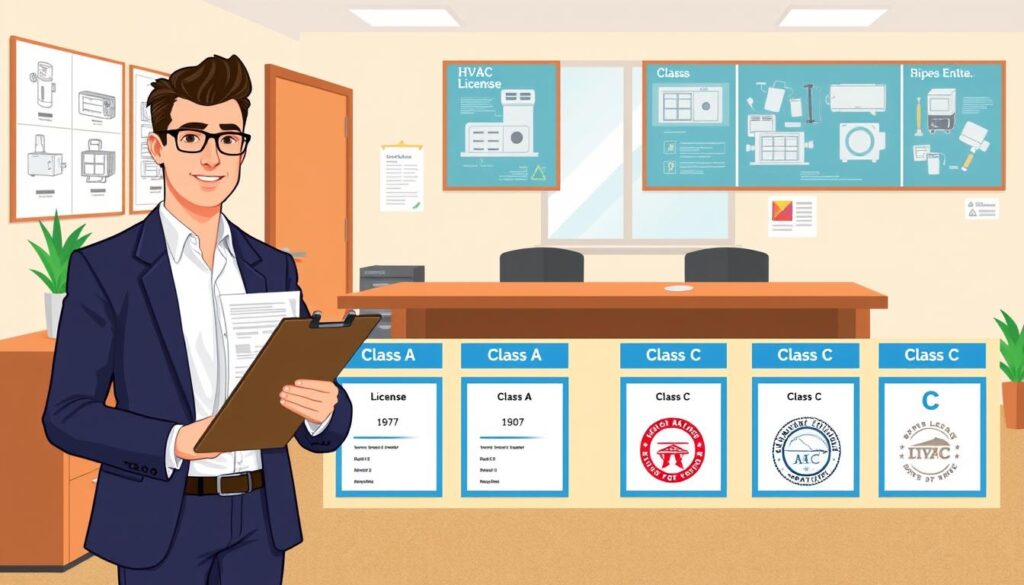
The journeyman credential represents your first independent authorization. It allows unsupervised work on projects valued under $1,000. Meeting specific education and experience thresholds is required.
Journeyman, Master, and Contractor License Levels
A master license provides expanded capabilities. You can plan installation details and supervise other tradesmen. This level still restricts you to smaller projects under the $1,000 threshold.
Contractor licenses are issued to business entities rather than individuals. They come in three distinct class categories. Each class has different project limits and requirements.
| License Class | Project Limits | Experience Required | Business Capital |
|---|---|---|---|
| Class A | Unlimited projects | 5 years master-level | $45,000 |
| Class B | Under $120,000 per project | 3 years experience | $15,000 |
| Class C | Under $10,000 per project | 2 years experience | Minimal requirements |
Unique HVAC-Specific Requirements
A specialized Residential credential exists for work on dwellings only. It excludes commercial and government structures. Any project costing $1,000 or more requires a contractor license.
You must complete an 8-hour pre-education course from an approved provider. Designating Responsible Members for your business is mandatory. Proper insurance coverage is essential for all contractor operations.
Explore Our HVAC Shop
Looking for top-rated HVAC tools, parts, and accessories? Visit our shop and find the perfect solution for your needs.
Visit the ShopExplore Our HVAC Shop
Looking for top-rated HVAC tools, parts, and accessories? Visit our shop and find the perfect solution for your needs.
Visit the ShopExplore Our HVAC Shop
Looking for top-rated HVAC tools, parts, and accessories? Visit our shop and find the perfect solution for your needs.
Visit the Shophow to get hvac license in virginia
Multiple routes exist for qualifying to take the HVAC licensing examination in Virginia, each with distinct requirements. Your journey begins with meeting basic prerequisites: you must be at least 18 years old and possess a high school diploma or GED equivalent.

The state recognizes eight different pathways combining education and hands-on work. Options range from a bachelor’s degree in mechanical engineering with one year of practical experience to ten years of verified field work without formal training. Associate degrees from two-year programs require two years of additional experience.
Step-by-Step Process from Entry to Licensure
After satisfying your chosen pathway’s requirements, submit your application to the Board for Contractors. Use either interactive online forms or static documents mailed to their Richmond office. The Department of Professional and Occupational Regulation reviews all submissions.
Virginia contracts with PSI Testing Services to administer all trade examinations. Contact them at 855-340-3910 or through their website to schedule your test. Passing the journeyman examination grants your first professional credential.
Advancement to master level requires documenting either one year as a licensed journeyman or accumulating ten years total trade experience. Contractor credentials demand additional steps including an 8-hour pre-education course.
“The structured progression from entry-level to master technician ensures comprehensive skill development and public safety.”
Realistic timelines show a minimum four-year qualification period for the journeyman exam. Plan for at least one additional year working professionally before pursuing master status. Each step provides earning opportunities while building your career.
Preparing for the HVAC Licensing Exam in Virginia
Understanding the structure and content of the state-mandated examination represents a critical step in your professional journey. Proper preparation ensures you demonstrate the required knowledge effectively.
Exam Details, Format, and Open Book Guidelines
The Residential assessment contains 55 questions with a 120-minute time limit. You need 39 correct answers to pass. Both this test and the Journeyman/Master examination are open book.
The comprehensive Journeyman/Master test includes 85 questions covering advanced topics. You have 270 minutes to complete it. Passing requires 60 correct answers for journeyman level or 64 for master.
Permitted references include the 2021 International Mechanical Code and Modern Refrigeration and Air Conditioning textbook. You can tab and highlight these materials before your test. Strategic organization of resources saves valuable time during the examination.
Recommended Training Programs and Study Resources
Virginia requires vocational training through approved providers. These include accredited colleges and Virginia Apprenticeship Council programs. Proprietary schools approved by the Virginia Department of Education also qualify.
Investing in exam preparation courses can significantly boost your confidence. These programs focus on the specific knowledge areas tested. They help you develop efficient reference navigation skills for the open book format.
PSI Testing Services administers all computerized examinations throughout the state. You receive immediate results upon completion. Pre-approval from the Board is required before scheduling your test date.
Navigating Practical Experience and Training Options
Multiple accredited institutions across Virginia provide specialized technical instruction for mechanical systems professionals. You can choose from various formats to meet your educational needs and career timeline.
HVAC Apprenticeships and Technical School Programs
Apprenticeship programs typically span five years. They combine paid practical experience with classroom education. This pathway satisfies both training and work requirements simultaneously.
Virginia’s Community College System offers associate degrees and certificate programs. These courses are available at eight HVAC Excellence-accredited locations. Options include Northern Virginia Community College and Virginia Beach Technical Center.
Program durations vary significantly. Certificate programs typically take six months to one year. Associate degree options require approximately two years of study.
| Program Type | Duration | Experience Gained |
|---|---|---|
| Apprenticeship | 5 years | Paid on-the-job training |
| Certificate Program | 6-12 months | Fundamental technical skills |
| Associate Degree | 2 years | Comprehensive systems knowledge |
Continuing Education and Certification Renewal
All credentials must be renewed every two years through the DPOR. The renewal fee is $90. You need three hours of continuing education for each cycle.
These courses keep technicians current with evolving technologies and safety standards. Virginia maintains reciprocity with Maryland for credential recognition.
Conclusion
Achieving state-approved credentials unlocks significant opportunities in the heating and cooling industry. Virginia’s structured pathway from journeyman to master and contractor levels provides clear professional advancement.
While the process requires substantial experience and time investment, professionals earn competitive wages throughout their training. The state’s strong job market with 6% growth makes this an ideal time to enter the trade.
Proper credentialing is legally mandatory and enables you to operate a business, pull permits, and bid on government projects. For detailed guidance on this process, consult this comprehensive Virginia HVAC credentialing resource.
Your journey begins with meeting education and experience requirements. Additional insights are available through this HVAC licensing guide. Take the first step toward building your rewarding career today.