
Affiliate Disclosure
HVAC Guide Guys is a participant in the Amazon Services LLC Associates Program, an affiliate advertising program designed to provide a means for sites to earn advertising fees by advertising and linking to Amazon.
Is your air conditioning system not working right? It’s costing you money and making your home uncomfortable. Refrigerant leaks can make your HVAC system very inefficient, hurting your wallet and home’s cooling.
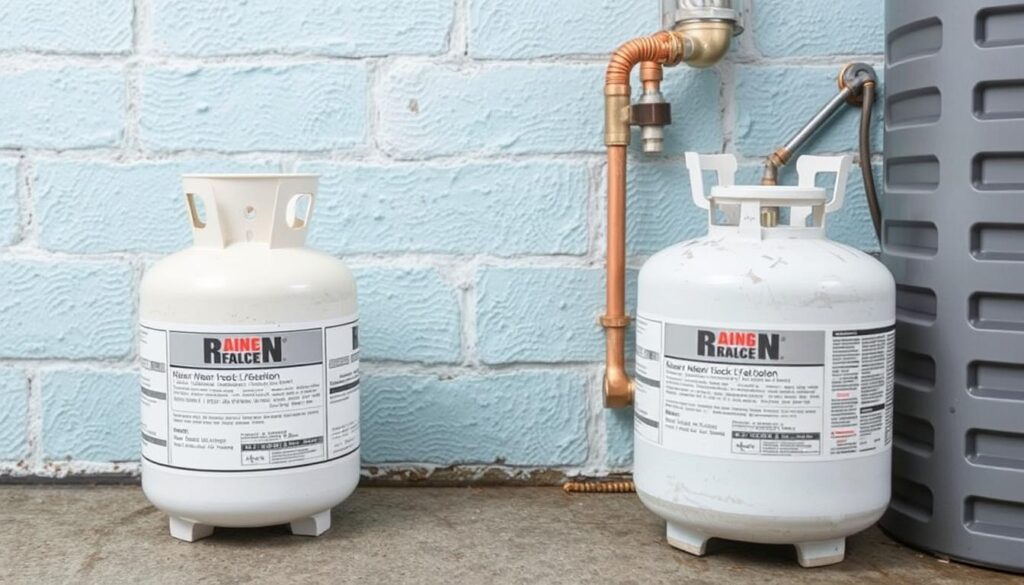
Dealing with refrigerant leaks in your AC system is a big challenge. These leaks can make your HVAC system work poorly. This leads to weak airflow, more energy use, and damage to expensive parts.
To fix HVAC refrigerant leaks, you need a good plan and careful steps. Your repair plan should mix technical skills with safety. This way, you protect your equipment and the environment.
Key Takeaways
- Refrigerant leaks can cause significant HVAC system damage
- Professional expertise is key for complex refrigerant system repair
- EPA rules limit handling refrigerant to pros
- Proper leak detection stops expensive repairs later
- Regular maintenance stops refrigerant leaks
Table of Contents
Understanding Refrigerant and Its Role in Your HVAC System
Your HVAC system needs refrigerant to cool your home. This special substance is key to keeping you cool during hot weather.
Refrigerant is vital for heat transfer. It changes from liquid to gas to absorb and release heat. Knowing how it works helps you keep your cooling system running smoothly.
What Is Refrigerant and How Does It Work
Refrigerant is a special chemical that helps with heat exchange. Here’s how it works:
- Absorbs heat from indoor air
- Transforms from liquid to gas
- Transfers heat outside the home
- Converts back to liquid state
Common HVAC Appliances That Use Refrigerant
Many home cooling devices rely on refrigerant:
| Appliance Type | Refrigerant Dependency |
|---|---|
| Central Air Conditioners | High |
| Window Unit Air Conditioners | Medium |
| Heat Pumps | High |
| Ductless Mini-Split Systems | High |
Why Refrigerant Should Last Your System’s Lifetime
Your HVAC system should never need refrigerant recharged. Hvac freon leak detection is key if you see performance drop. Refrigerant should stay in a closed loop, not deplete.
Low refrigerant means a leak, not normal use. A pro can find and fix refrigerant issues before they cost a lot.
Explore Our HVAC Shop
Looking for top-rated HVAC tools, parts, and accessories? Visit our shop and find the perfect solution for your needs.
Visit the ShopRecognizing the Signs of an HVAC Refrigerant Leak
Finding out about refrigerant leaks early can save you a lot of money on repairs. Knowing the signs of an air conditioner refrigerant leak is key to keeping your system running well.
Your HVAC system tells you when there’s a refrigerant problem through certain signs. Look out for these important warning signs:
- Reduced Cooling Performance: Your air conditioner runs all the time but can’t cool your space enough
- Extended Operating Cycles: The system takes longer to cool your space than usual
- Unusual Sounds: Hissing or bubbling sounds near the refrigerant lines mean there’s a leak
Low refrigerant signs can show up in unexpected ways. Ice on your indoor evaporator coil might seem odd, but it’s a warning. When refrigerant levels go down, the coil gets too cold. This stops it from absorbing heat right and can harm your system.
Also, watch for these other signs of refrigerant loss:
- High indoor humidity even when the air conditioner is on
- Unexpected jumps in your electricity bills
- Visible oil stains around the copper refrigerant lines
Catching these signs early can stop expensive compressor damage and make your HVAC system last longer. If you see several signs, it’s time to check for a refrigerant leak.
Why Topping Off Refrigerant Is Not a Long-Term Solution
Many homeowners add more refrigerant when they face recharge problems. This quick fix seems easy but can harm your HVAC system and the environment.
Fixing refrigerant leaks needs more than a quick fix. Adding more refrigerant is like a band-aid on a broken pipe. It won’t fix the real problem and can cause more issues later.
The Hidden Dangers of Simply Recharging Your System
Improper HVAC repair can lead to serious problems:
- Potential compressor damage from improper refrigerant levels
- Reduced system efficiency
- Increased energy consumption
- Risk of complete system failure
“Refilling without fixing the leak is like trying to fill a bucket with a hole in the bottom.”
Environmental and Legal Implications of Improper Refrigerant Handling
The impact of refrigerant goes beyond your home. The EPA has strict rules for handling refrigerants. Breaking these rules can lead to fines up to $37,500 per day.
Knowing these risks helps you make better choices for your HVAC system. It protects your equipment and the environment.
Explore Our HVAC Shop
Looking for top-rated HVAC tools, parts, and accessories? Visit our shop and find the perfect solution for your needs.
Visit the ShopGathering the Right Materials and Tools for Refrigerant Leak Repair
Getting ready for an HVAC refrigerant leak repair needs careful planning and the right tools. You must have top-notch hvac repair tools and follow EPA-approved methods. This ensures safety and success in the repair.
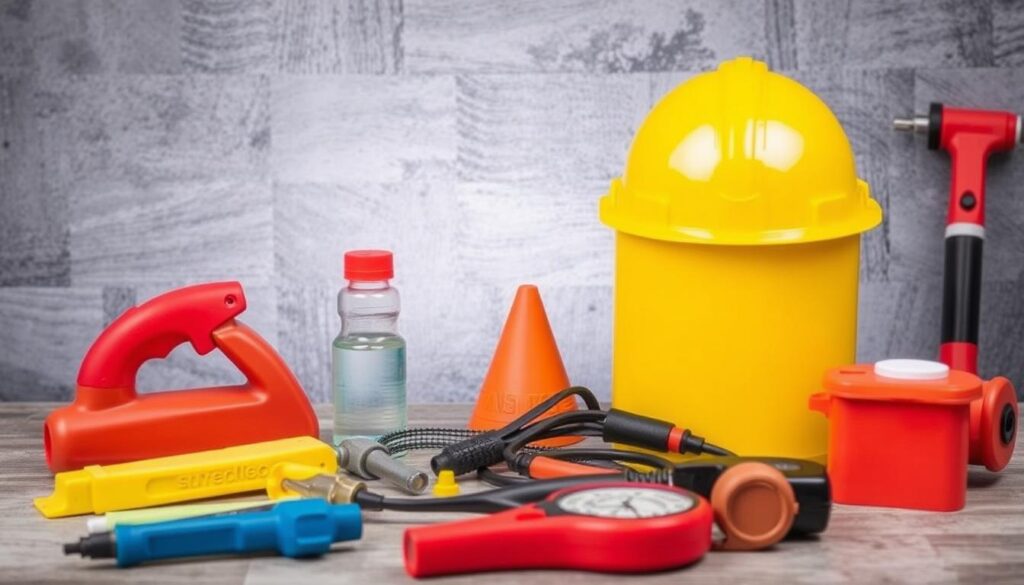
Before you start, gather a detailed toolkit for precision and safety. The right tools are key to a successful repair and avoiding system failure.
Essential Repair Materials
- Copper wire for reinforcement
- Electronics grade silver-bearing solder
- Flux for HVAC use
- Fine-grit sandpaper or emery cloth
- MAPP gas or propane torch
Your refrigerant leak detection tools are vital for finding and fixing issues. High-quality electronic leak detectors can find even tiny refrigerant leaks with great accuracy.
Safety Gear for HVAC Repair
- Safety glasses or face shield
- Heavy-duty leather work gloves
- Long-sleeved protective clothing
- Respiratory protection
- UV dye detection kit
*Safety is not an option—it’s a requirement when working with refrigeration systems.*
Remember, EPA rules limit refrigerant sales and require certain certifications for repairs. Always put safety first and follow professional guidelines when fixing HVAC systems.
How to Fix HVAC Refrigerant Leak: Locating and Preparing the Leak Site
Finding and fixing a refrigerant leak needs careful steps. Your safety and the repair’s success depend on good leak detection and copper line prep.
- Turn off power to the HVAC system at the circuit breaker
- Remove the front grille and air filters
- Wear protective safety glasses and gloves
Leak detection involves several steps to find where the refrigerant is leaking:
- Visual inspection of the whole refrigerant circuit
- Check for oil residue around connection points
- Look for corrosion or discoloration on copper lines
There are two main ways to find the leak:
| Method | Accuracy | Cost |
|---|---|---|
| Soap Bubble Test | Good | Low |
| Electronic Leak Detector | Excellent | High |
Preparing copper lines for repair needs careful surface prep. Use fine-grit sandpaper to clean the area around the leak. This removes oxidation and ensures a clean copper surface. Proper preparation is key for successful soldering and leak repair.
Remember, fixing a refrigerant leak requires precision. If you’re unsure about any step, it’s best to get help from a licensed HVAC professional. This can prevent system damage or personal injury.
Applying Heat and Filler Material to Seal the Leak
Fixing refrigerant lines needs precision and skill. Sealing ac refrigerant leaks is more than just covering a hole. It requires a strategic approach to make a strong, lasting seal that can handle extreme conditions.
Professional HVAC technicians know that fixing copper pipes is not just about patching. It takes special skills and techniques for lasting results.
Using Copper Wire as Reinforcement Filler
Copper wire is key in brazing refrigerant lines. Your repair plan should include these steps:
- Select copper wire slightly smaller than the gap
- Clean the wire well to remove dirt
- Place wire to cover the damaged area
- Make a reinforced patch to spread out stress
Proper HVAC Soldering Techniques
Learning hvac soldering techniques means knowing how to use heat and understand materials. Here’s a look at different soldering methods:
| Technique | Temperature Range | Strength Level |
|---|---|---|
| Low-Temperature Soldering | 400-700°F | Low |
| Brazing | 1100-1500°F | High |
Important soldering tips include using the torch flame directly on the copper tubing. Watch for the right color changes and make sure the material is fully penetrated. Never move the joint while cooling to prevent microscopic cracks.
Safety first: Always have a fire extinguisher nearby and work in a well-ventilated area to avoid toxic fumes.
Pulling a Vacuum to Test Your Repair
After fixing a refrigerant leak in AC, a vacuum test is key. It checks if your repair works well. This step makes sure your system is sealed before adding expensive refrigerant.
- Manifold gauge set
- Vacuum pump
- Micron gauge
- Wrench
Here’s how to do a thorough vacuum test:
- Connect manifold gauges to service ports
- Make sure all connections are hand-tight plus a quarter turn
- Connect vacuum pump to center hose
- Open high and low-side valves
- Run vacuum pump for 20-30 minutes
Keep an eye on your gauges while vacuuming. You’re aiming for a pressure drop to at least 500 microns. After stopping the pump, close manifold valves and wait 15-30 minutes. A steady vacuum means your repair is good.
If the vacuum goes up, you have another leak. A slow increase might be moisture, but a quick rise means more work before adding refrigerant.
Explore Our HVAC Shop
Looking for top-rated HVAC tools, parts, and accessories? Visit our shop and find the perfect solution for your needs.
Visit the ShopRecharging Your System with the Correct Refrigerant Type
Fixing your central air conditioning leak needs the right refrigerant. It’s important to know about HVAC refrigerant types. This keeps your system running well and saves energy.
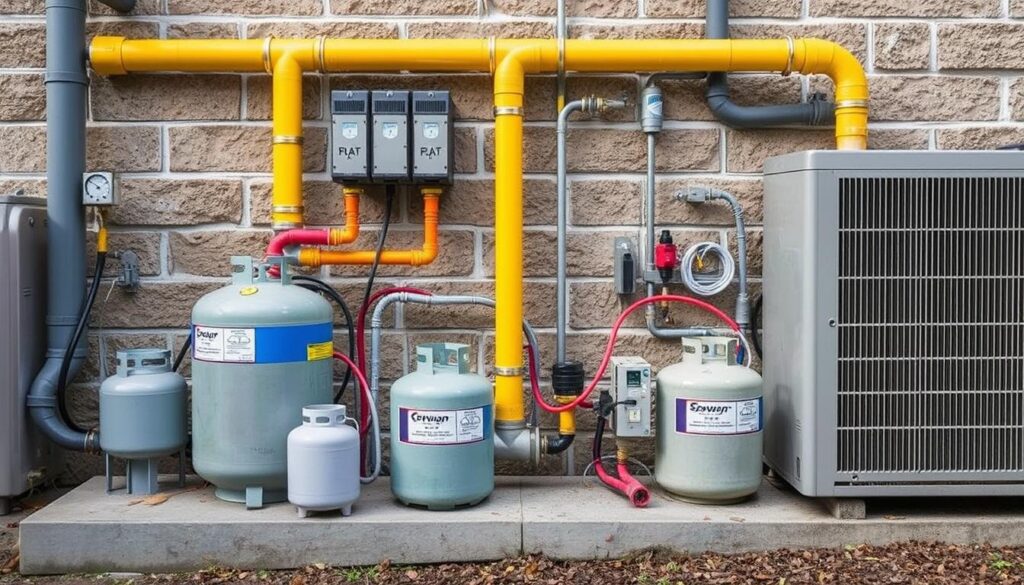
Choosing the right refrigerant is key. It affects how long your system lasts and its impact on the environment.
Understanding Refrigerant Options
Today’s HVAC systems use different refrigerants. Each has its own special features:
- R-410A: The standard for homes
- R-134a: Often found in cars
- R-32: A new, eco-friendly choice with less harm to the planet
Proper Refrigerant Charging Techniques
Recharging your system needs to be done right. Experts suggest these steps:
- Make sure you use the right refrigerant for your system
- Use manifold gauges correctly
- Add refrigerant a little at a time
- Watch the system’s pressure closely
| Refrigerant Type | Pressure Characteristics | Environmental Impact |
|---|---|---|
| R-410A | High Pressure | Moderate Global Warming |
| R-32 | Moderate Pressure | Low Global Warming |
| R-134a | Lower Pressure | Higher Global Warming |
*Caution: Always check the manufacturer’s guide before adding refrigerant.*
Pro tip: Wrong refrigerant can damage your system and lower its efficiency.
Load Testing and Fine-Tuning Your HVAC System
After fixing your DIY refrigerant leak, the last step is important: testing your HVAC system. This makes sure it works well and cools your space right.
Load testing checks if your refrigerant is just right. You’ll look at a few key things:
- Cooling output temperature difference
- Compressor operating temperature
- System power consumption
- Refrigerant pressure readings
When optimizing your system, watch these important signs closely. Even small changes can help a lot. Add refrigerant a little at a time, like an ounce or two. Wait 10-15 minutes for the system to settle before checking again.
Look for these signs that your system is working well:
- Consistent cooling output
- Stable compressor temperature
- Power draw matching specifications
- No frost on suction lines
But, if you see problems like short cycling or liquid refrigerant, it’s not right. Be patient during testing. This ensures your HVAC works great all summer.
When to Call a Licensed HVAC Professional Instead
Dealing with refrigerant repairs can be challenging. Some tasks are easy, but fixing leaks needs a pro. Knowing when to call a licensed technician can avoid costly errors and legal issues.
It’s important to call a pro in certain situations. This choice protects your system, saves money, and keeps you out of trouble.
EPA Certification: The Legal Requirement
The EPA has strict rules for handling refrigerants. Technicians must get specific certifications to legally work with them:
- Type I certification for small appliances
- Type II certification for high-pressure systems
- Type III certification for low-pressure systems
- Universal certification covering all refrigerant types
Working on refrigerants without the right certification can lead to huge fines. Up to $37,500 per day. These rules keep our environment and people safe.
Understanding HVAC System Leak Repair Costs
Fixing HVAC leaks can cost between $200 and $1,500. Prices vary based on:
- Leak location and severity
- Refrigerant type
- Geographic region
- Required repair complexity
Even though it might seem pricey, hiring a pro is worth it. They do a thorough job, follow the law, and ensure your system works right.
Choosing professional repair means you’re following the rules, avoiding damage, and feeling secure.
Conclusion
Knowing how to fix HVAC refrigerant leaks is key to keeping your home cool. You now know how to spot problems early and fix them. Taking care of your HVAC system is more than just staying cool—it’s also about saving money and avoiding big repairs later.
Stopping refrigerant leaks starts with regular maintenance. Check your system often, keep coils clean, and fix any odd sounds or performance issues quickly. While some fixes are easy to do yourself, others need a pro with EPA certification.
Your HVAC system is complex and needs care. Knowing when to fix it yourself and when to call a pro is important. By staying alert and informed, you’ll keep your system running well, save money, and protect the environment.
Knowledge is your best ally. Whether you fix small issues yourself or call a pro for big jobs, knowing your HVAC system’s needs helps you make smart choices. This keeps your home comfortable all year.
FAQ
How do I know if my HVAC system has a refrigerant leak?
Can I fix a refrigerant leak myself?
How much does professional refrigerant leak repair cost?
How do I know if my HVAC system has a refrigerant leak?
Can I fix a refrigerant leak myself?
How much does professional refrigerant leak repair cost?
FAQ
How do I know if my HVAC system has a refrigerant leak?
Look for signs like less cooling, longer run times, and hissing sounds near lines. Also, check for ice on the evaporator coil, higher bills, and oil stains. These signs mean you might have a leak that needs fixing fast.
Can I fix a refrigerant leak myself?
You can do some checks yourself, like looking for leaks. But, handling refrigerant legally needs an EPA certification. A certified HVAC tech is needed for the real fix.
How much does professional refrigerant leak repair cost?
Repair costs range from 0 to
FAQ
How do I know if my HVAC system has a refrigerant leak?
Look for signs like less cooling, longer run times, and hissing sounds near lines. Also, check for ice on the evaporator coil, higher bills, and oil stains. These signs mean you might have a leak that needs fixing fast.
Can I fix a refrigerant leak myself?
You can do some checks yourself, like looking for leaks. But, handling refrigerant legally needs an EPA certification. A certified HVAC tech is needed for the real fix.
How much does professional refrigerant leak repair cost?
Repair costs range from $200 to $1,500. It depends on the leak’s spot, refrigerant type, and system type. The price includes finding the leak, fixing it, testing, and recharging.
What happens if I just keep adding refrigerant without fixing the leak?
Adding more refrigerant without fixing the leak is risky and against the law. It can harm your compressor, raise energy costs, and lead to EPA fines. It also harms the environment by releasing harmful gases.
How often should refrigerant be replaced in an HVAC system?
Refrigerant should last 10-15 years if there are no leaks. If you’re losing it, you have a leak that needs fixing, not just a maintenance job.
What refrigerant types are currently used in residential HVAC systems?
R-410A (Puron) is the main type now. Older systems might use R-22 (Freon), which is being phased out. New systems are starting to use R-32, which is better for the environment but needs special care.
What tools do I need to detect a refrigerant leak?
You’ll need soap bubble solutions, electronic detectors, and UV dye systems for basic detection. But, for accurate detection, you might need a pro.
Are there environmental concerns with refrigerant leaks?
Yes, refrigerants can harm the ozone layer and are potent greenhouse gases. The EPA has strict rules for handling refrigerants. Releasing them into the air can lead to big fines and harm the environment.
What are the signs of an overcharged HVAC system?
Signs include high power use, overheating, and poor cooling. You might also see liquid refrigerant in the suction line and high pressures. These problems can seriously damage your system if not fixed.
How long does a typical refrigerant leak repair take?
Repair usually takes 2-4 hours. It depends on the leak’s location and how complex it is. The process includes finding the leak, fixing it, testing, and recharging.
,500. It depends on the leak’s spot, refrigerant type, and system type. The price includes finding the leak, fixing it, testing, and recharging.
What happens if I just keep adding refrigerant without fixing the leak?
Adding more refrigerant without fixing the leak is risky and against the law. It can harm your compressor, raise energy costs, and lead to EPA fines. It also harms the environment by releasing harmful gases.
How often should refrigerant be replaced in an HVAC system?
Refrigerant should last 10-15 years if there are no leaks. If you’re losing it, you have a leak that needs fixing, not just a maintenance job.
What refrigerant types are currently used in residential HVAC systems?
R-410A (Puron) is the main type now. Older systems might use R-22 (Freon), which is being phased out. New systems are starting to use R-32, which is better for the environment but needs special care.
What tools do I need to detect a refrigerant leak?
You’ll need soap bubble solutions, electronic detectors, and UV dye systems for basic detection. But, for accurate detection, you might need a pro.
Are there environmental concerns with refrigerant leaks?
Yes, refrigerants can harm the ozone layer and are potent greenhouse gases. The EPA has strict rules for handling refrigerants. Releasing them into the air can lead to big fines and harm the environment.
What are the signs of an overcharged HVAC system?
Signs include high power use, overheating, and poor cooling. You might also see liquid refrigerant in the suction line and high pressures. These problems can seriously damage your system if not fixed.
How long does a typical refrigerant leak repair take?
Repair usually takes 2-4 hours. It depends on the leak’s location and how complex it is. The process includes finding the leak, fixing it, testing, and recharging.